What Zone Is Gatwick Airport? A Complete Guide to London Fare Zones, Oyster & Travel Costs
If you’re planning a journey between London and Gatwick, one of the most common questions is what zone is gatwick airport? The clear and updated answer is this: Gatwick Airport is treated as Zone 6 for Oyster and contactless pay-as-you-go travel, but it is not actually inside Greater London and it is not a standard Underground Zone 6 station.
Instead, Gatwick Airport railway station operates under special fare rules. There is a premium station access charge built into rail tickets, and the airport sits outside the official Transport for London (TfL) boundary. Understanding how this works can help you avoid confusion, unexpected charges and last-minute stress when travelling.
As a UK transport system specialist, this guide explains everything commuters, tourists and airport passengers need to know.
Understanding London Transport Zones Explained
London’s public transport network is divided into TfL fare zones, which range from Zone 1 (Central London) outwards to Zone 9 in some outer areas. These zones determine how much you pay when using:
- London Underground
- London Overground
- Elizabeth line
- DLR
- Most National Rail services within Greater London
The general rule is simple: the further you travel across zones, the more you pay.
However, Gatwick Airport is slightly different. Although it is treated as Gatwick Airport Zone 6 for Oyster and contactless purposes, it is physically located outside the Greater London boundary. That distinction is important.
What Zone Is Gatwick Airport in London’s Fare System?
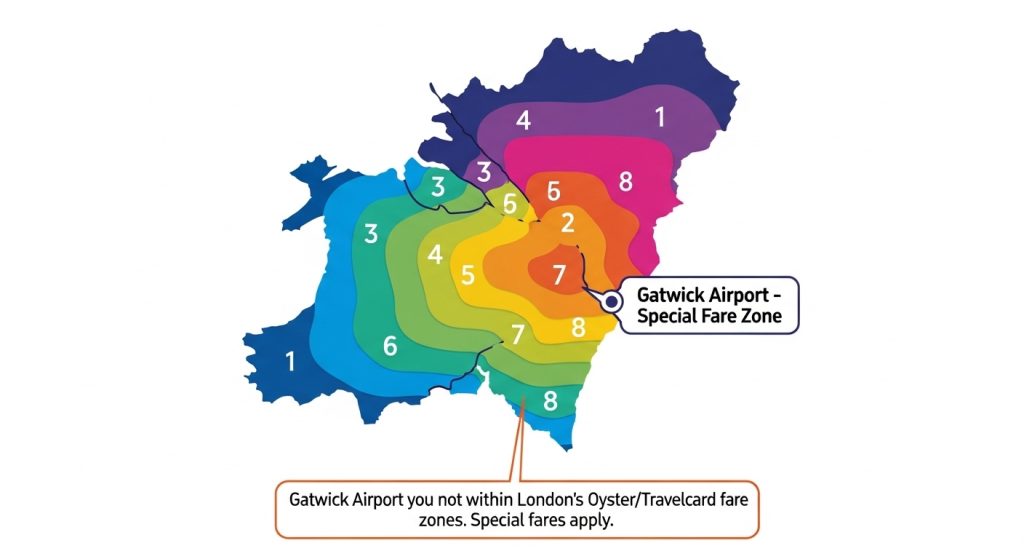
To directly answer the question what zone is gatwick airport within the fare structure: it is classified as Zone 6 for Oyster and contactless pay-as-you-go journeys, but it is not a London Underground station and does not sit within the official TfL boundary.
This means:
- You can use Oyster card Gatwick services.
- You can use contactless travel Gatwick payments.
- Daily caps apply differently than typical Zone 6 stations.
- A premium station access charge is included in rail fares.
It is therefore treated like Zone 6 for payment purposes only, not geographically or administratively.
Is Gatwick Inside Greater London?
No. Gatwick Airport is located in West Sussex, just south of the Greater London boundary.
While it is well connected to London by rail, it is technically outside London’s administrative limits. This is why:
- It is not part of London Underground.
- It is not managed as a standard TfL station.
- It operates under National Rail rules with integrated pay-as-you-go acceptance.
This hybrid status is the root of much passenger confusion.
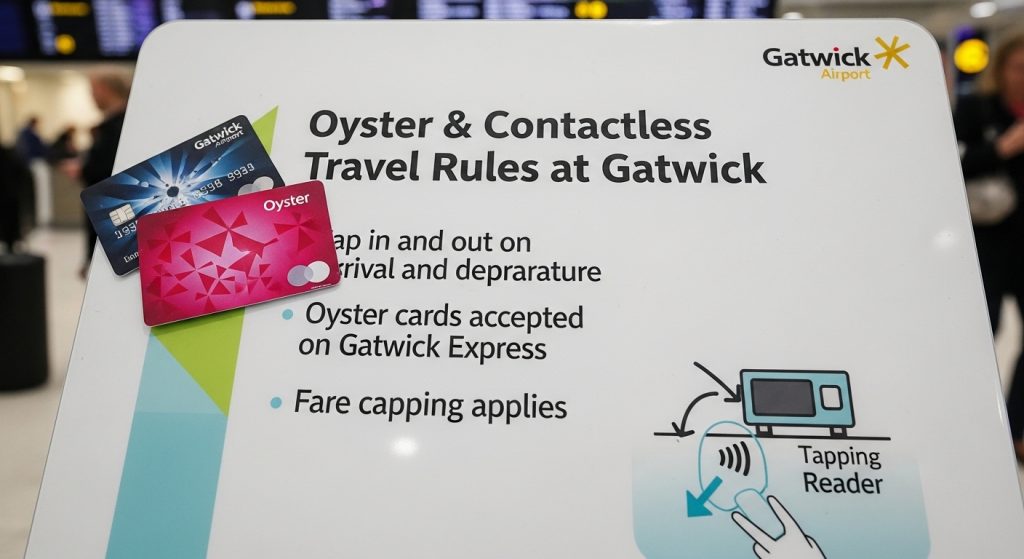
Oyster & Contactless Travel Rules at Gatwick
Since 2016, passengers have been able to use Oyster and contactless at Gatwick Airport railway station. However, the fare structure differs from regular TfL zone stations.
Key Rules to Know
- Treated as Zone 6 for pay-as-you-go calculation
- Premium access charge included in fares
- Daily caps may not match typical Zone 1–6 caps
- No Travelcard season ticket coverage beyond boundary rules
If you are travelling from Central London:
- Peak fares are higher than many Zone 6 destinations.
- Off-peak fares are cheaper but still include station surcharge.
This is why Gatwick train fares often appear more expensive than expected.
Gatwick Airport Railway Station Fare Structure
Gatwick Airport railway station is served by:
- Southern
- Thameslink
- Gatwick Express
All operate under National Rail conditions, not Underground rules.
Why Is There a Premium Charge?
Gatwick Airport Limited applies a station access charge to train operators using the airport station. This cost is passed on to passengers through ticket pricing.
As a result:
- Fares are higher than comparable Zone 6 suburban stations.
- Even contactless travel Gatwick journeys include this premium.
- Gatwick Express remains the most expensive option.
Understanding this avoids the misconception that Gatwick is “just another Zone 6 stop.”
Also Read Who Is the Owner of Gatwick Airport?
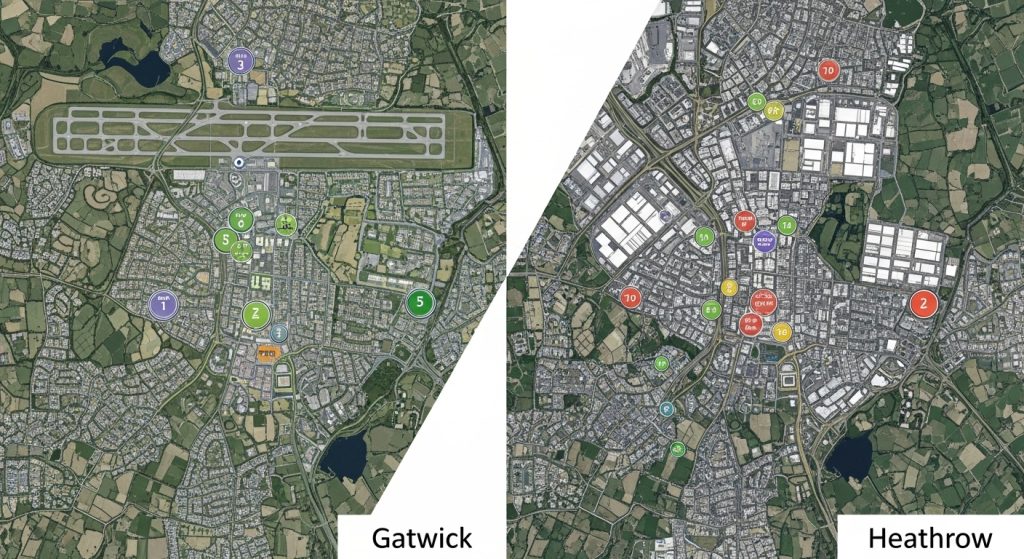
Difference Between Gatwick and Heathrow in Zoning
Passengers often compare the two major London airports.
Heathrow Airport
Heathrow Airport is located within Greater London and benefits from a direct connection to the London Underground via the Piccadilly line. It falls under Zone 6 for the Underground, and the Elizabeth Line is also integrated within the Transport for London (TfL) fare system, making it relatively straightforward for travellers using Oyster or contactless payments.
Gatwick Airport
Gatwick Airport is located outside Greater London and does not have an Underground connection. Access is primarily by rail, and although it is treated as Zone 6 for Oyster and contactless payments, it operates under premium fare rules, meaning the costs can be higher than standard Zone 6 travel. While both airports are connected to London’s rail networks, Heathrow offers more integrated transport options within the TfL system, whereas Gatwick relies on mainline rail services with slightly different fare regulations.
National Rail vs TfL Zone System Explained
To understand confusion around London transport zones, it helps to distinguish between:
TfL Fare Zones
TfL Fare Zones cover services such as the London Underground, Overground, DLR, and the Elizabeth line. Travel within these zones uses a simple zonal pricing system, which means fares are calculated based on the zones you travel through. Oyster cards and contactless payments are fully integrated, and daily or weekly fare caps help limit the total cost for frequent travellers, making it predictable and convenient.
National Rail System
National Rail System operates differently. Fares are usually distance-based, depending on how far you travel, and each train operator may have its own fare structure. Some stations, including airport stations like Gatwick, may also apply surcharges, so costs can vary significantly compared to TfL services.
Travel Costs Comparison: Train vs Taxi vs Coach
| Feature | Train (Contactless/Oyster) | Gatwick Express | National Express Coach | Pre-Booked Taxi |
|---|---|---|---|---|
| Average Cost | Medium to High (Peak higher) | Highest | Lowest | Fixed agreed price |
| Peak Pricing | Yes – Higher fares apply | Yes – Premium pricing | No major fluctuation | No peak changes |
| Journey Time | 30–45 minutes | Around 30 minutes | 1.5–2 hours (traffic dependent) | 60–90 minutes (traffic dependent) |
| Convenience | Station to station | Station to station | Coach station drop-off | Door-to-door service |
| Luggage Handling | Limited space | Limited space | Moderate space | Ideal for heavy luggage |
| Best For | Solo travellers | Business travellers | Budget travellers | Families & groups |
| Fare Simplicity | Zone-based complexity | Fixed premium fare | Fixed ticket price | Simple upfront quote |
When Zoning Matters for Travellers
Understanding zoning is particularly important if you:
- Rely on daily or weekly fare caps
- Use a Travelcard
- Expect standard Zone 1–6 pricing
- Commute regularly
For occasional airport passengers, the key takeaway is that Gatwick is not priced like a typical suburban Zone 6 station.
Also Read Which Terminal Does easyJet Fly From Gatwick?
Common Passenger Confusion About “Zone 6”
Many travellers assume:
- Gatwick is fully inside London
- Underground services operate there
- Standard Zone 6 fares apply
None of these are entirely accurate.
While it is treated as Gatwick Airport Zone 6 for payment purposes, the airport remains outside the London Underground network and outside Greater London geographically.
This subtle but important distinction explains why fares can appear unexpectedly high.

Travel Planning Tips to Avoid Unexpected Charges
To prevent fare surprises:
- Always check peak vs off-peak times
- Tap in and out correctly with contactless
- Avoid forgetting to touch out (penalty fares apply)
- Compare rail operators before booking
- Consider luggage needs and group size
If travelling early morning or late night, train frequency may reduce, increasing waiting times.
Taxi Alternative for Predictable Pricing
Complex fare rules, premium station charges and peak pricing can create uncertainty particularly for visitors unfamiliar with TfL fare zones.
A pre-booked Gatwick Airport taxi offers:
- Fixed fare agreed before travel
- No surge pricing
- Direct pickup from home, hotel or office
- Reliable arrival timing
For families, business travellers or those with significant luggage, this can provide pricing clarity that rail zoning sometimes lacks.
While trains are efficient, understanding full Gatwick train fares ensures you make the right decision for your circumstances.
Why Are Gatwick Train Fares Higher?
Several factors contribute:
- Premium station access charge
- National Rail pricing structure
- Airport infrastructure costs
- Operator pricing policies
Unlike most suburban stations, airport stations often carry additional operating costs.
Also Read Is There a Boots at Stansted Airport?
FAQs
1. Is Gatwick Airport in Zone 6?
Yes, for Oyster and contactless pay-as-you-go travel it is treated as Zone 6, but it is outside Greater London and not a standard Underground station.
2. Can I use Oyster at Gatwick?
Yes. Oyster card Gatwick travel is accepted at Gatwick Airport railway station.
3. Is Gatwick part of the London Underground?
No. There is no Underground line serving Gatwick Airport. It is served by National Rail services only.
4. Why are Gatwick train fares higher?
Because of a premium station access charge and National Rail fare structure, which differs from standard TfL zone pricing.
5. Is Heathrow in the same zone as Gatwick?
Both are treated as Zone 6 in fare terms, but Heathrow is inside Greater London and served by the Underground, while Gatwick is not.
6. Does contactless cost more at Gatwick?
Contactless fares include the same premium charges as Oyster pay-as-you-go fares. Prices vary by time of travel.
7. Do daily caps apply at Gatwick?
Daily caps apply differently than standard Zone 1–6 travel and may be higher due to airport fare rules.
8. Is Gatwick Express included in Zone 6 fares?
No. Gatwick Express has its own pricing and is typically more expensive than standard Southern or Thameslink services.
Conclusion: Understanding What Zone Is Gatwick Airport
if you’re still wondering what zone is gatwick airport, the answer is this: it is treated as Zone 6 for Oyster and contactless travel, but it is not inside Greater London and it is not part of the Underground network. Special National Rail fare rules apply, including a premium station charge, which is why prices can be higher than a normal Zone 6 journey.
The key is to understand that Gatwick is only considered Zone 6 for payment purposes not geographically or operationally. Once you know this, it becomes much easier to compare train costs, avoid unexpected charges, and decide whether rail, coach or a pre-booked taxi is the best option for your trip.
A little knowledge about the zoning system can make your journey between London and Gatwick Airport smoother, clearer and far less stressful.